
Add Your Heading Text Here

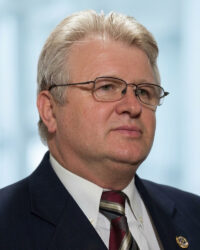
Robert Zawierucha was elected President of the Polish Alliance of Canada Head Executive Board at an extraordinary PAC Assembly in Hamilton in 2002. He held the position for 14 years, until 2016.
He was born in Warsaw on December 22, 1951. He is married to Czeslawa and they have two children, son Marek and daughter Ilona. They came to Canada in 1990. They decided to immigrate mainly due to economic and political reasons, since most of his family had already moved to Canada or to the United States, and he was considered an “enemy of the people.”
Robert Zawierucha began his volunteer work through his passion of fishing. He was one of the founding members of The Polish Hunting Club and its first fisherman. Looking for a place to organize the traditional Christmas Eve hunt, he discovered a farm in Osaka, which belonged to The Polish Alliance of Canada. There, he met PAC Branch 9 President Jerzy Mazur and PAC Head Executive Board member Tadeusz Ustaszewski. These two men were directly responsible for his decision to join the ranks of this considerable Polish organization.
In 1992, PAC Branch 9 was a young Branch, reactivated after nearly seventy years of non-existence. At an accounting and election meeting in January 1992, Robert Zawierucha was elected PAC Branch 9 Organizer and, a year later, its President. In 1994, Branch 9’s members decided to merge with PAC Branch 5, and they all moved to that Branch.
At the first PAC Branch 5 meeting, he was elected its Vice-president and, a few months later, took the position of President, once Piotr Kovell resigned. Piotr Kovell had had an enormous influence on the development of Robert’s Alliance personality; Robert was PAC Branch 5’s President for six terms between 1994 and 2000. His successor was the greatly devoted PAC volunteer Wladyslaw Kowal.
The 1990’s were the most difficult period in the Alliance’s history. President Tadeusz Glista’s successors were unable to continue his visionary development of the organization, and the Alliance’s slow decline began. One by one, Alliance businesses went bankrupt, like the travel agency and the bookstore, while The Alliancer and the printing press had thousand-dollar losses every month.
An enormous deficit surfaced at Place Polonaise in Grimsby. It was difficult for Robert, who was newly-arrived in Canada and who had only had short training within the PAC, to become aware of all of the nuances of the faulty, as it later turned out, Alliance work. When he was suddenly chosen to fill the position of The Alliancer’s director in May 1994, he tasted for the first time the bitterness of defeat resulting from his and other directors’ inabilities, in trying to save this institution from financial ruin and bankruptcy.
Regardless of the fact that expenses were limited to a minimum, that the accountant had advised such work, and that a majority of members approved it, the discrepant stance of certain volunteers having a proxy at a Polish Alliance Press Ltd. shareholders’ meeting prevented the Press Management from receiving a vote of acceptance.
The road to The Alliancer’s bankruptcy was opened. A few years later, the multimillion-dollar property was used to pay for the debts, of which the partner had incurred a significant part.
At an extraordinary PAC Assembly in Hamilton, called in response to a plea from a group of devoted Alliance volunteers, Robert Zawierucha took on the position of Head Executive Board President after the resignation of Jan Azman-Zielinski.
It was a difficult decision, and he probably did not realize what kinds of problems he would have to face. Among them were: the tragic financial situation; the lack of domicile; the lack of funds to rent an office and to hire a secretary even for a few hours; the need to reimburse the loans and mortgage; the divided Alliance community; and two-faced enemies and false friends. He had already faced similar problems in Poland when he had decided to resign from the ranks of the Polish Army.
The election of Robert Zawierucha to the position of President of the oldest Polish organization caused an avalanche of critiques from those, who gave themselves the right to express the only “correct” opinions and the right to control the wealth of Polish organizations. The intricate plan to take over this wealth, modeled on the loss of the property on Bloor Street West in Toronto, failed.
Accumulated unclear affairs from the past, attempts to privatize the Alliance wealth, and attempts to separate The W. Reymont Foundation from the Alliance were most likely steps towards the organization’s collapse.
Other such steps included reciprocally placing blame for the current state, “demanding heads,” passing judgments without reason, and turning attention away from relevant issues through personal attacks and fabrications of the past.
Robert Zawierucha expects nothing, neither glorifications nor compliments. The tasks that he has assigned for himself and for his coworkers – the PAC Head Executive Board members – include: complete volunteer work for this organization, honesty and publicity in all work and decisions, wide-ranging consultations before making any important Alliance decisions, and rectifying harms caused to Alliance members and to the Alliance as a whole.
He truly believes that these objectives will be accomplished, that The Polish Alliance of Canada will worthily celebrate its beautiful Jubilee and strongly and richly enter the next 100 years with its statute, and that future boards will concentrate on the development of this deserving Polish organization without having to fight for survival.
He sincerely believed that only agreement, giving up irrational personal ambitions, positive thinking, and taking care of the spiritual development of the young generation through cultivation of Polish traditions and customs and through propagation of Polish culture, can lead to a betterment of the image of the Polish ethnic group in Canada.
Only cooperation of all Polish organizations congregated within the Canadian Polish Congress can lead to desired effects.
One wishes for The Polish Alliance of Canada that the written appraisal of Robert Zawierucha’s character in many official opinions, being that
“in difficult and extreme situations he makes quick and accurate decisions, be corroborated by his organizational work.”