
Add Your Heading Text Here
The resolution’s text is cited below for its historical value:
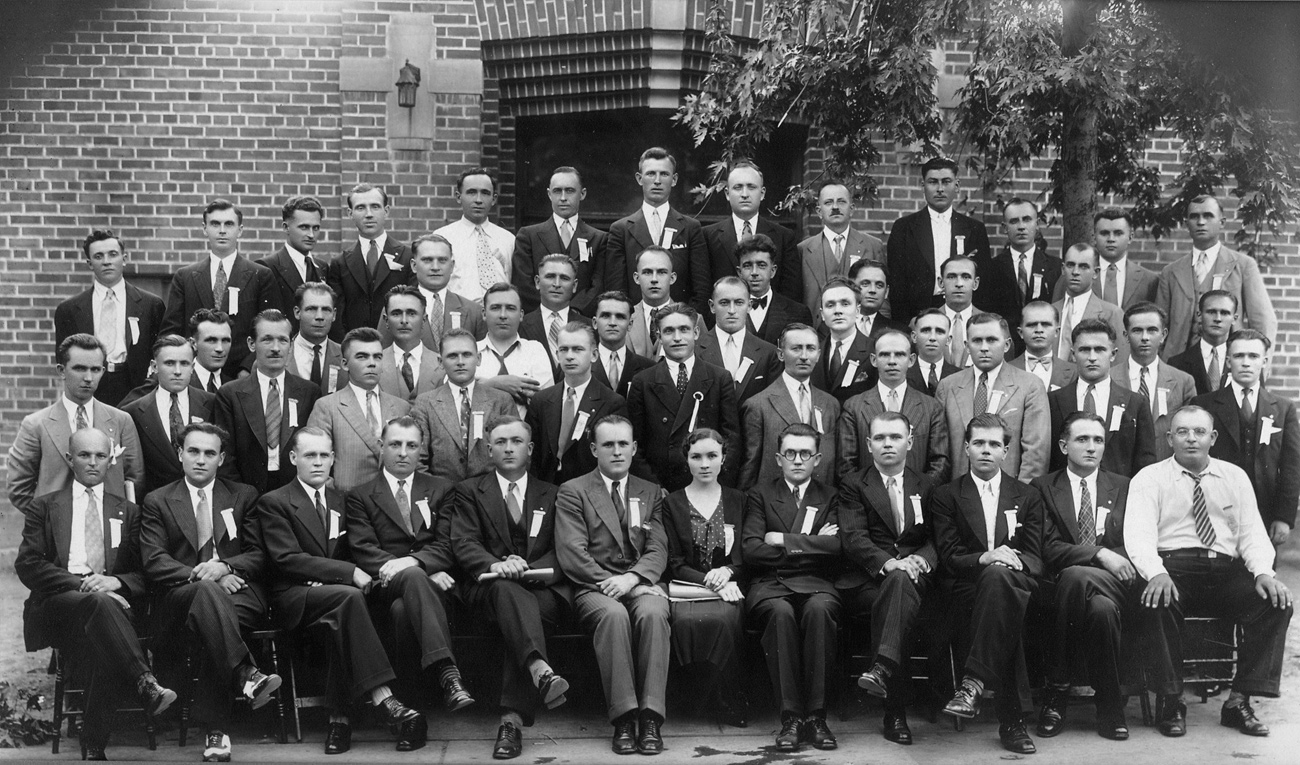
The first Head Executive Board (then called the “Central Board”) was chosen at the Assembly and consisted of representatives from both branches in Toronto and Hamilton. Its members were President Kazimierz .J. Mazurkiewicz, Vice-president A. Pieprzak, Recording Secretary A. Piekarz, Financial Secretary K. M. Gutowski, Cashier A. Bojdys, and Organizer P. Horniak.
After a preparatory stage, the PAC Head Executive Board officially began its administration at an inaugural meeting, which took place on March 29, 1930, at the Alliance’s local Occident Hall, located at the intersection of Queen and Bathurst Streets.
Amazingly, the Head Executive Board was able to organize three new branches in a span of six months, from the 1st PAC Assembly to their inaugural meetings. These branches were Branch 3 in St. Catharines, Branch 4 in Kitchener, and Branch 5 in West Toronto.
By the end of 1930, Branch 6 in Preston and Branch 7 in New Toronto had also been established. In 1932, three more branches were added to the Alliance: Branch 8 in Swansea, Branch 9 in Toronto, and Branch 10 in Brantford.
During the 100+ years of existence and activity of The Polish Alliance of Canada, 48 geographical branches were created; each Branch received the consecutive number of its creation, except for the youngest Mississauga Branch created in 1995. This branch was given the number 95.
Over the years, some branches ceased to exist, while others fused with neighbouring branches to create strong centres of activity. An important reason for the end of many branches’ activity was the diminishing number of Polish immigrants settling in Northern Ontario.
After World War II, gold and uranium mining centres had quickly been established there; this had caused a significant inflow of immigrants including Poles. Wladyslaw Baskiewicz, a member of the PAC and organizer of the Steelworkers’ Union, was able to organize the Polish community of Northern Ontario into branches.
He was responsible for the formation of Branch 32 in Pembroke, Branch 33 in Orillia, Branch 35 in Red Lake, Branch 36 in Atikokan, Branch 37 in Geraldton, Branch 38 in Fort Frances, Branch 39 in Kapuskasing, Branch 40 in Wawa, Branch 41 in Elliot Lake, and Branch 42 in Bancroft. When the Canadian government closed the gold and uranium mines in the 1960’s, residents of those areas, including PAC members, migrated to look for work. As a result, those Alliance branches ceased to exist.
Once the Head Executive Board was formed, there was a need to normalize the activities of organizations associated with each individual Branch and to establish correct regulations and statutes for them. The next five Assemblies were dedicated to this task, along with many corrections of the Constitution; regulations were created for Alliance Schools, Amateur Theatre Circles, Youth Alliances, Educational Departments, Ladies’ Circles, and The Polish Alliance of Canada’s Scouts.
At the 1st Assembly, a censor for the PAC was chosen, but according to the Alliance’s changed Constitution, a Board of Directors, consisting of one representative from each Branch, took on the supervising and controlling responsibilities in 1930.
Today, the Board’s function is performed by the Head Executive Committee.